






Edaily | The Card GD Swiped Before His Military Enlistment
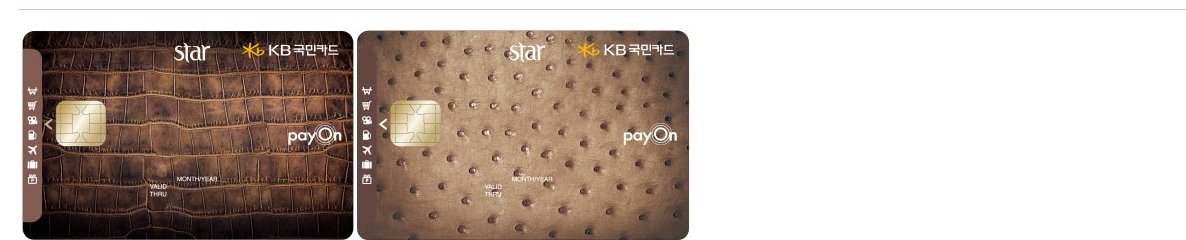
Edaily's 'Fun Facts' column traced the evolution of card materials and design, from Kookmin Card's leather-finish card to Hyundai Card's copper-alloy 'Coppal.' It also singled out Woori Card's newly launched 'Card Jeongseok,' noting the Korean-language product name and Korean painter Kim Hyun Jung's artwork applied to the left side of the card.
View full text
[Fun Facts] ⑥ The card GD swiped before his military enlistment
Posted 2018-04-20 06:00
[Edaily, Reporter Jeon Jae-wook] A credit card conjures up, for most people, a flat rectangle of plastic. As long as the swipe (or these days, the tap) works, that's all that matters. Yet card companies keep trying new approaches to engage every one of a customer's senses — the more a card gets used, the better.
Even card materials can be dressed up. Kookmin Card's 2008 'Leather Style Card,' finished to resemble ostrich and crocodile hide, was well received for its novelty — it targeted touch rather than sight. That year it won a 'GD (Good Design)' mark from the then Ministry of Knowledge Economy. It drew no protest from animal-welfare groups, since the surface was only specially treated to mimic leather. It's no longer sold today.
Woori Card's 'Card Jeongseok,' launched this month, stands out for two things. First is the welcome shift away from a name-plate crowded with flashy loanwords to a genuinely Korean name. Second, the left side of the card carries an actual work of art — a painting by Korean artist Kim Hyun Jung. A Woori Card representative said, "We can't disclose the exact licensing fee, but we do pay one," adding, "there's also a sense of supporting an artist."
Drop the assumption that a card has to be plastic. Hyundai Card's 'Coppal' card, launched in 2014, is made of a copper alloy. It's praised for its durability and heft — some say it takes real arm strength to swipe. Because of the raw-material cost, issuing it runs around 80,000 won. The company has produced cards from all manner of materials — transparent cards, mini cards, titanium and other metal cards.
Hyundai Card's premium cards made from Coppal material. From left: Black, Purple, and Red card. (Photo = Hyundai Card)
Some cards return benefits proportional to their annual fee. Hyundai Card's 'The Black Edition2' carries the industry's priciest annual fee — 2.5 million won a year (for combined domestic/overseas use), or more than 200,000 won a month. Not everyone who applies gets one; the company sends invitations to whomever it chooses to issue the card. The first card went to Hyundai Motor Group Chairman Chung Mong-koo. Even BIGBANG's G-Dragon (Kwon Ji-yong), now serving in the military, used this card as a civilian. Only 9,999 were slated for issue, and some remain. A Hyundai Card representative said, "There's a dedicated Black Card division, so security is airtight," adding, "the quickest way to guess who's using it is to eyeball it the moment someone pulls it out to pay."
The benefits are as lavish as the fee. It comes with coupons for luxury brands most people have barely heard of — Kiton, Ermenegildo Zegna, Brioni — and access to top-tier hotels. The company even arranges social gatherings among cardholders. Samsung Card's Raum O, Kookmin Card's Tantum, and Hana Card's Club 1 also carry annual fees in the millions of won, but none quite matches Hyundai Card.
It may look like discrimination, but there's little to challenge here. A Financial Supervisory Service official said, "When reviewing financial product terms, we look at potential consumer harm, not how large the annual fee is," adding that there's no issue. This is simply VVIP (very very important person) marketing by card companies — to the point that 'VVVIP' cards are now emerging, much as VVIP itself emerged once VIP became commonplace.
More cards are leaving the home, too. Cards that once lived in wallets have found new homes on mobile — in PayPal, Samsung Pay, and elsewhere. There's no precise industry-wide data, but the trend can be inferred from figures at Shinhan Card, the market leader. Among all of Shinhan Card's annual card transactions, the share paid with a physical card fell from 83.3% in 2015 to 82.4% in 2016 and 81.8% last year. An era of card payment without the card itself has arrived.
Data from the Bank of Korea's Payment and Settlement Systems Department's payment research team is also worth noting. In a survey of 2,511 people last year, the research team found that 19.5% owned a mobile card. The share was higher among people in their 20s (38.4%) and 30s (40.3%). Ownership and usage of mobile cards were roughly similar. Overall usage stood at 16.9%, at 33.6% for people in their 20s and 37.7% for those in their 30s. Kim Dong-seop of the Bank of Korea's payment research team, who conducted the study, said, "There are limits given it's a sample survey, but mobile-card usage is increasing year by year, and that trend is expected to continue for some time."
© Edaily, a comprehensive economic information medium. Unauthorized reproduction and redistribution before deletion prohibited.