





Segye Ilbo | National Daegu Museum’s “Women’s Hanbok Meets the Modern Era” Exhibition
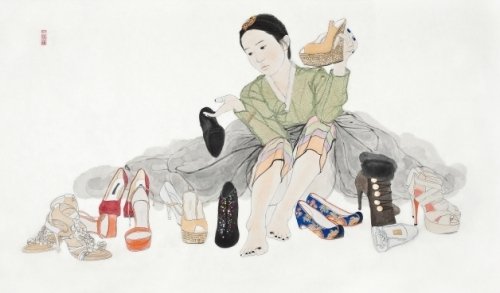
Segye Ilbo introduced the special exhibition “Women's Hanbok Meets the Modern Era,” running through March 10 at the National Daegu Museum. The article reported that in the epilogue of this exhibition, which traces the evolution of women's hanbok from the 1900s to the 1970s, prints by Korean painter Kim Hyun Jung are on display, offering a chance to compare and appreciate paintings of women in traditional and contemporary hanbok.
View full text
The special exhibition “Women's Hanbok Meets the Modern Era,” running at the National Daegu Museum through March 10, sheds new light on the hanbok that women wore in everyday life from 1900 to the 1970s, and the stories of Daegu women woven into that clothing.
During this period, Korea experienced the tumultuous history of Japanese colonial rule, the Great Depression, World War II and the Korean War, carrying the era's tension and conflict between preserving tradition and embracing Western culture as a shared challenge.
The National Daegu Museum unfolds this historical panorama through women's dress, presented almost like a fashion show.
More than 150 pieces of hanbok and related accessories and materials greet visitors, spanning the young schoolgirl's hanbok uniform worn during the March 1st Movement 100 years ago, 1950s velvet skirts, and 1960s-70s lace jeogori and Arirang skirts and jeogori, each representing its era and showing the fashions of the time.
At a time when traditional and modernized hanbok coexist, weren't modern women, wearing hanbok rather than Western dress, inconvenienced in terms of mobility and function? Alongside this question, another meaning of touring this exhibition is to focus on the fact that its subjects are none other than our own mothers and grandmothers.
The prologue in particular allows visitors to view Kim Hong-do's “Album of Genre Paintings” (Treasure No. 527) and Sin Yun-bok's “Album of Women's Customs,” works known only from textbooks, while the epilogue offers works by Korean painter Kim Hyun Jung, providing an opportunity to compare and appreciate paintings of women in traditional and contemporary hanbok.
Wedding hanbok from the 1950s-60s made by the late Lee Young-hee, a world-renowned hanbok designer from Daegu, are also on view alongside wedding photographs of local women from the time.
The exhibition is organized into three parts.
Part 1, “Modern Women Attempt to Change Hanbok,” divides the transformation of women's hanbok into the 1900s-1920s, 1930s-1940s, and 1950s-1970s, showing period-by-period changes in jeogori shape and fabric, along with related accessories and fashion magazines.
Part 2, “Women's Hanbok Walks Through Modern Daegu,” tells the little-known stories of modern Daegu women and the hanbok woven into their lives. On a stage set up as the “Daegu Women's Theater,” five women in hanbok appear to recount important historical moments in Daegu, such as the National Debt Repayment Movement and the March 1st Independence Movement.
Part 3, “Daegu Women Speak of Hanbok,” shares small personal stories tied to hanbok from the late Kwon Sun-bun, Lee Su-eok and Kim Gi-jun. Faded photographs unearthed through a citizen photo submission contest in particular become an occasion for turning memories into recollection.
The exhibition also introduces prints by Korean painter Kim Hyun Jung, who has drawn recent attention. Works featured center on pieces from her signature “Naesoong series” that find points of connection with modern women's hanbok.